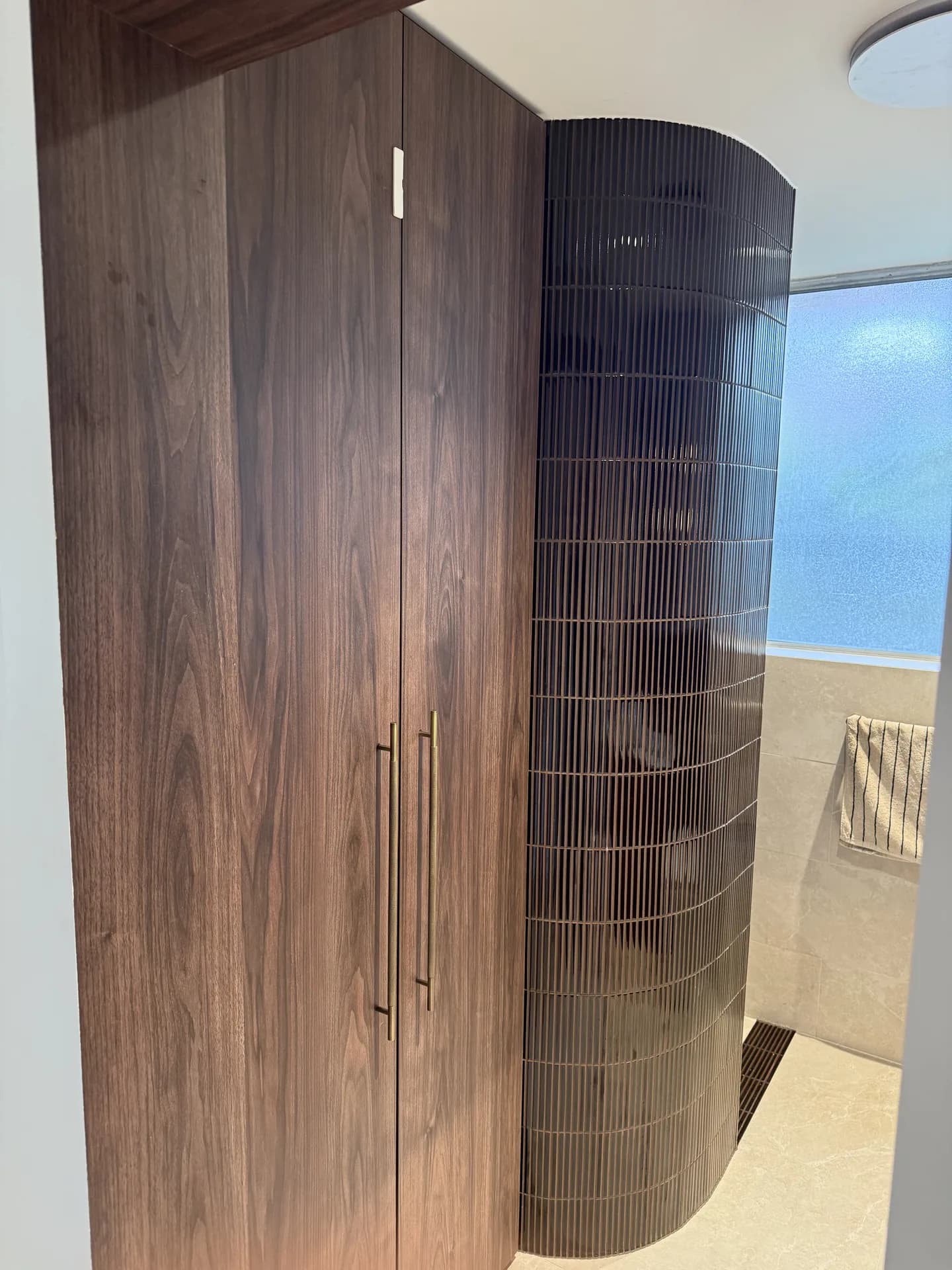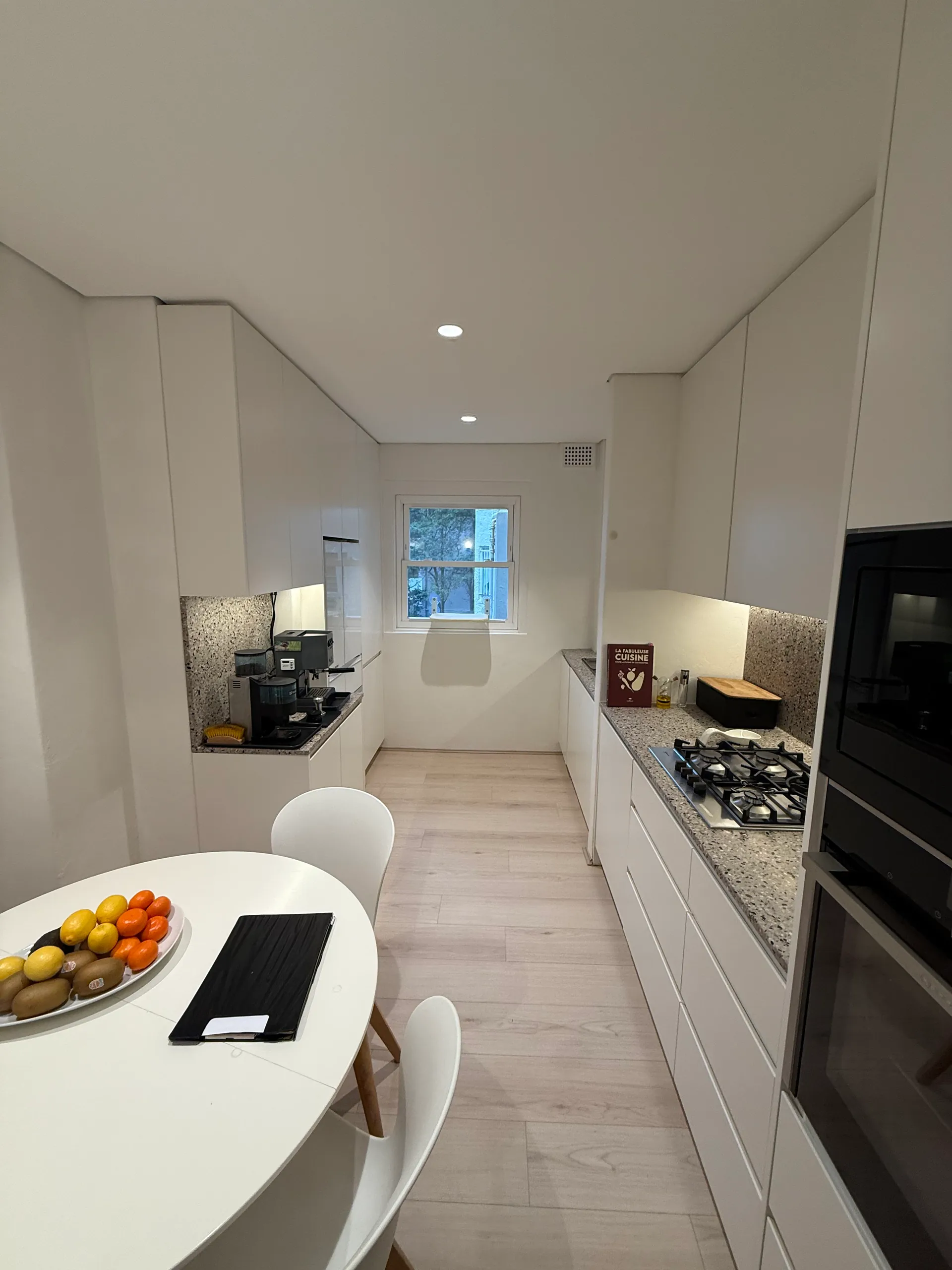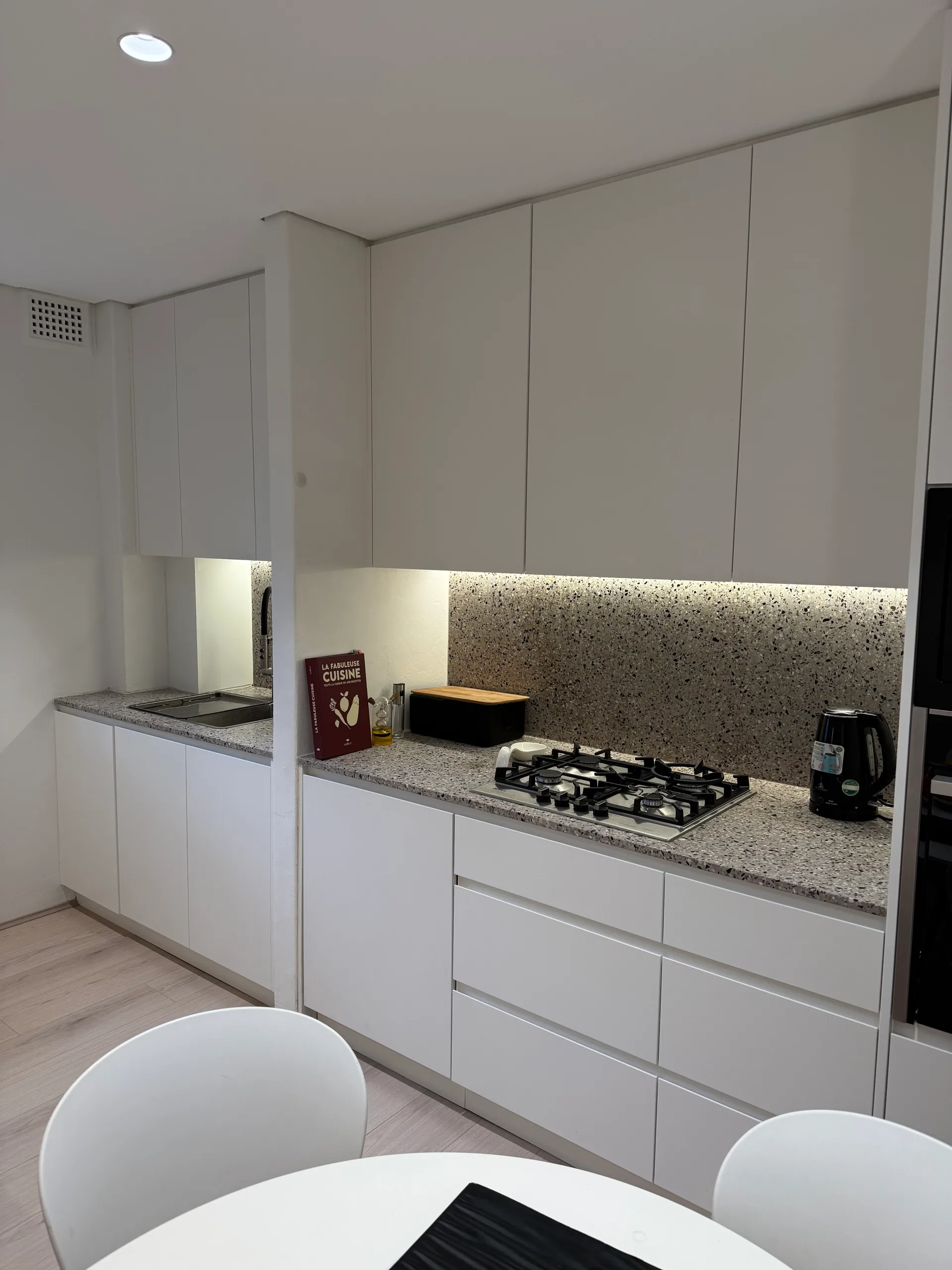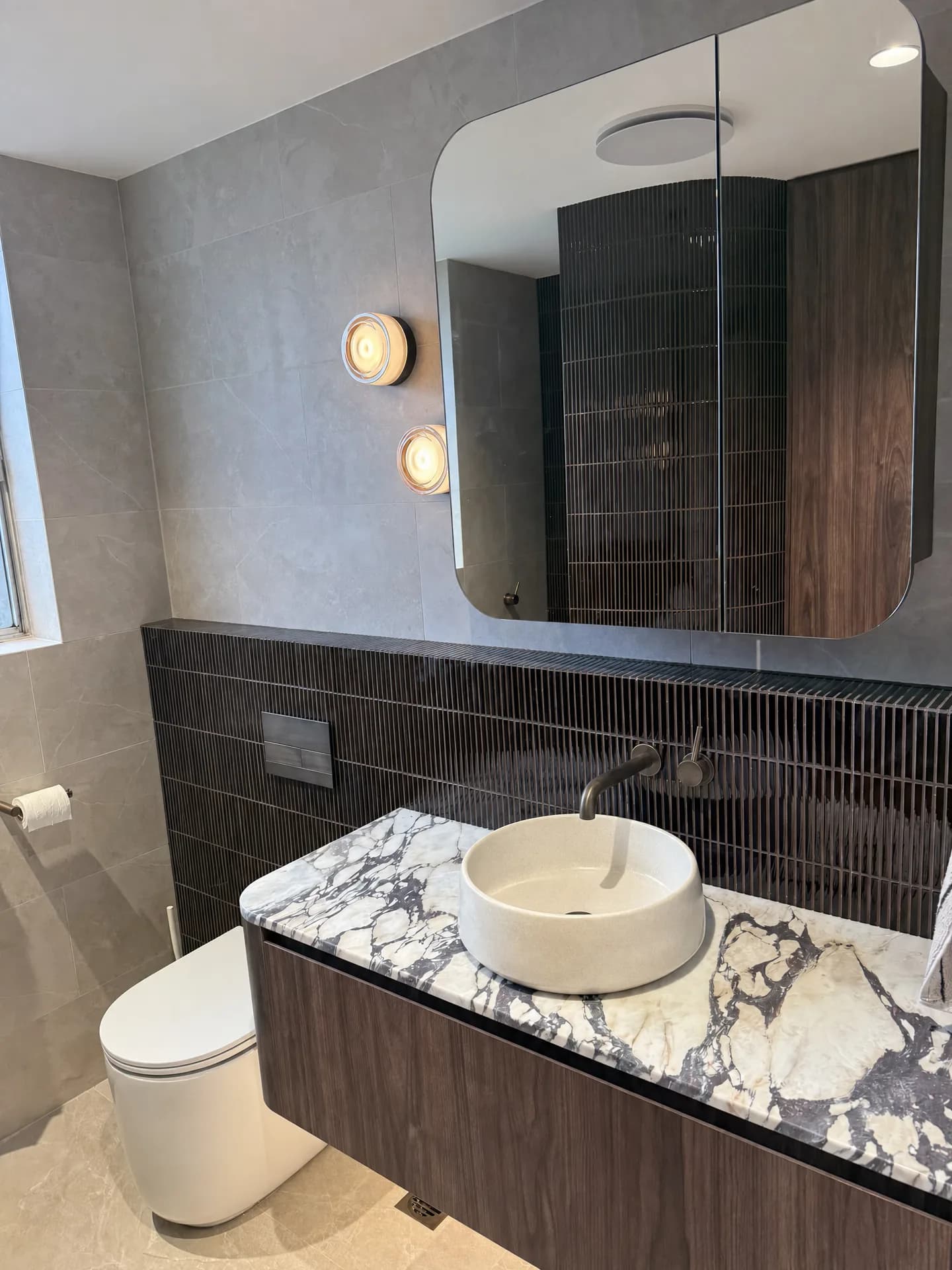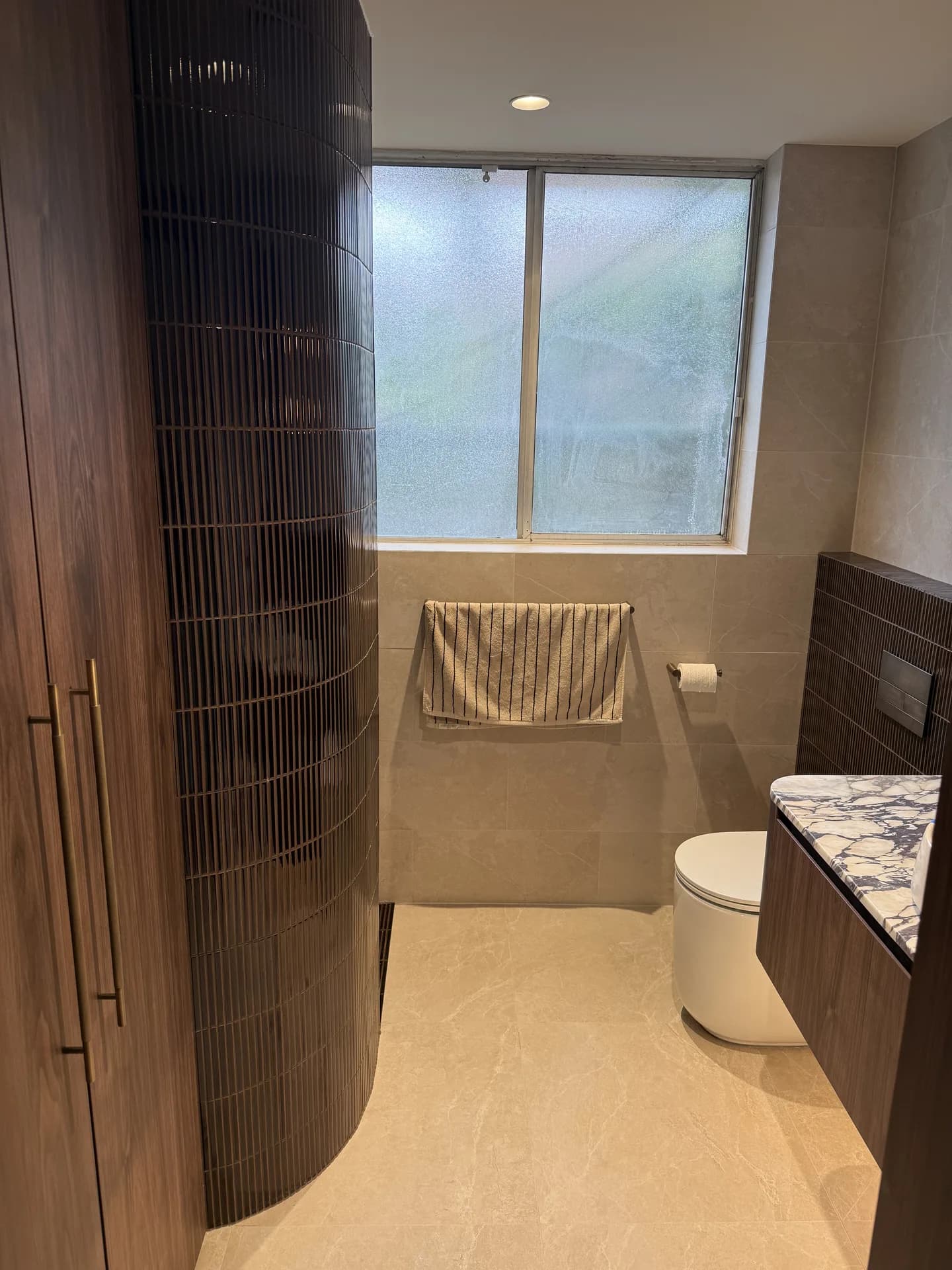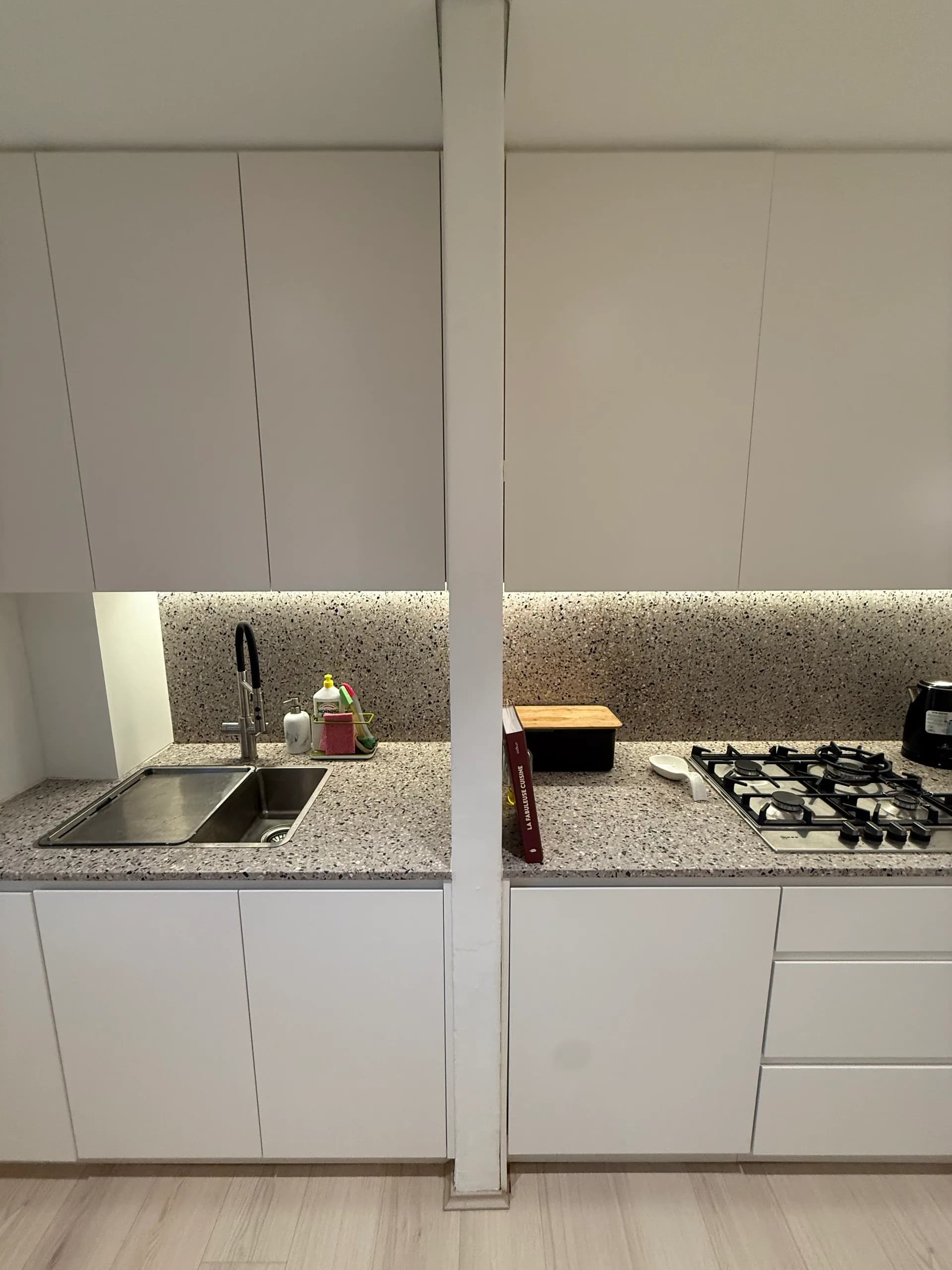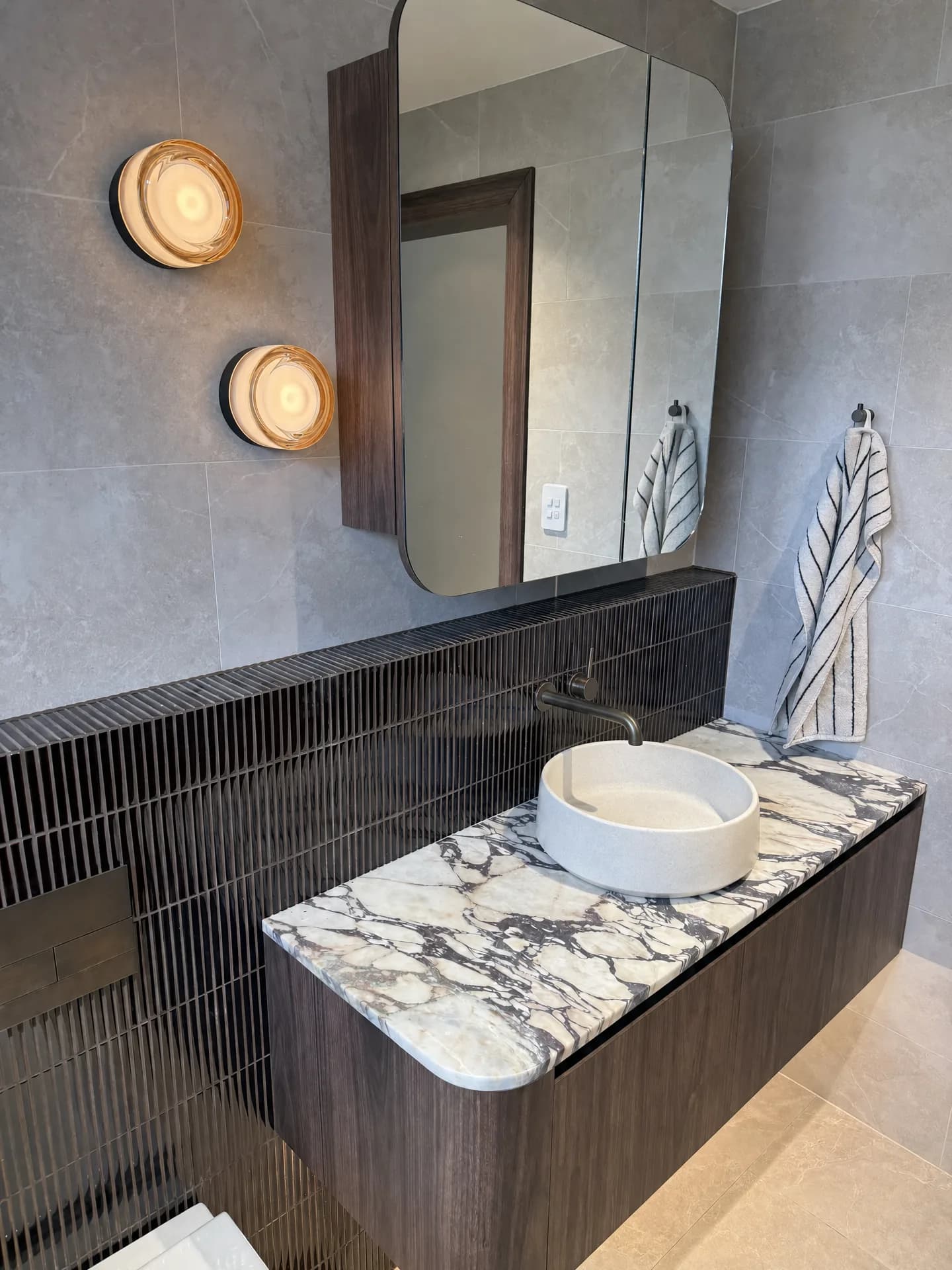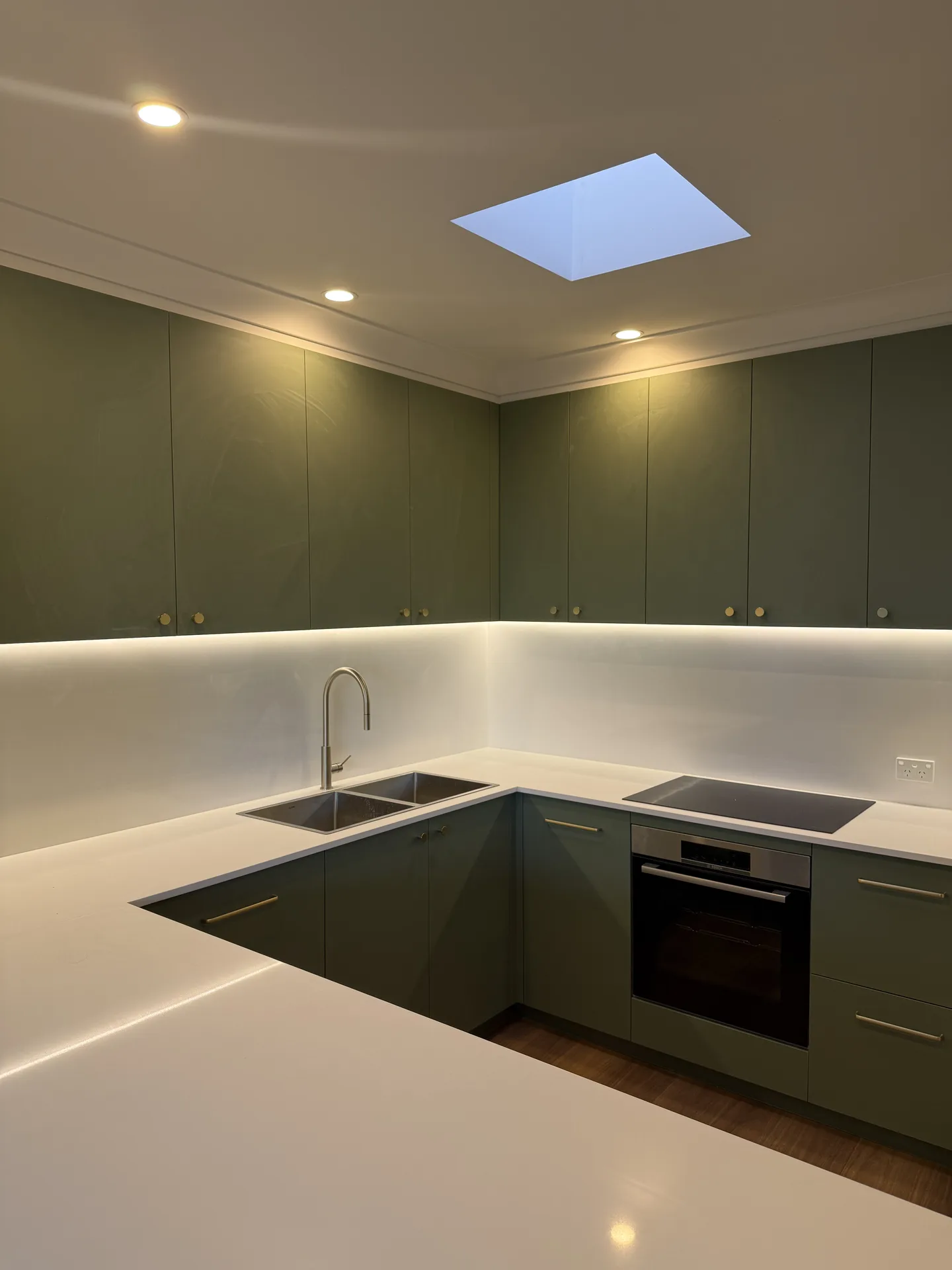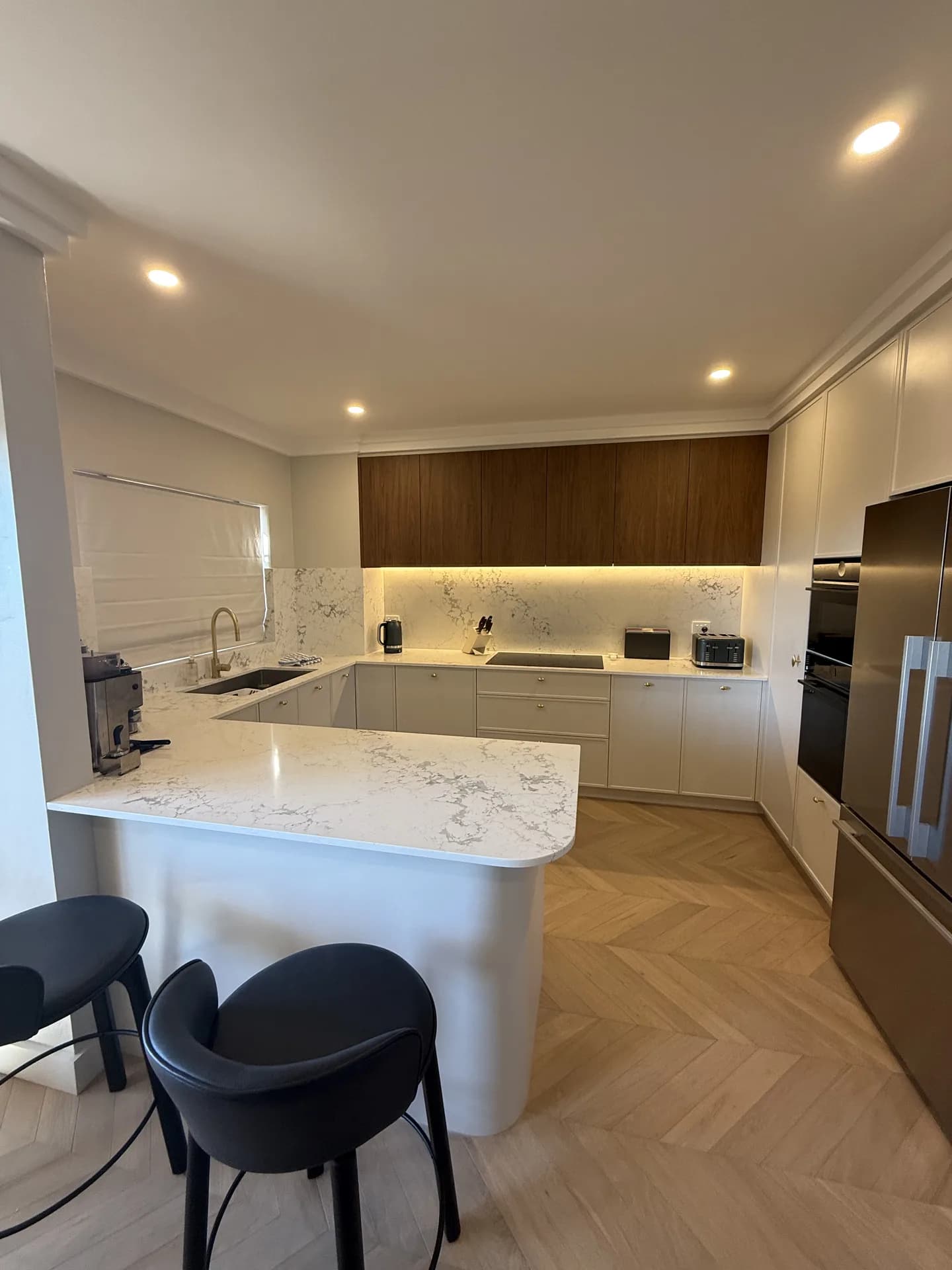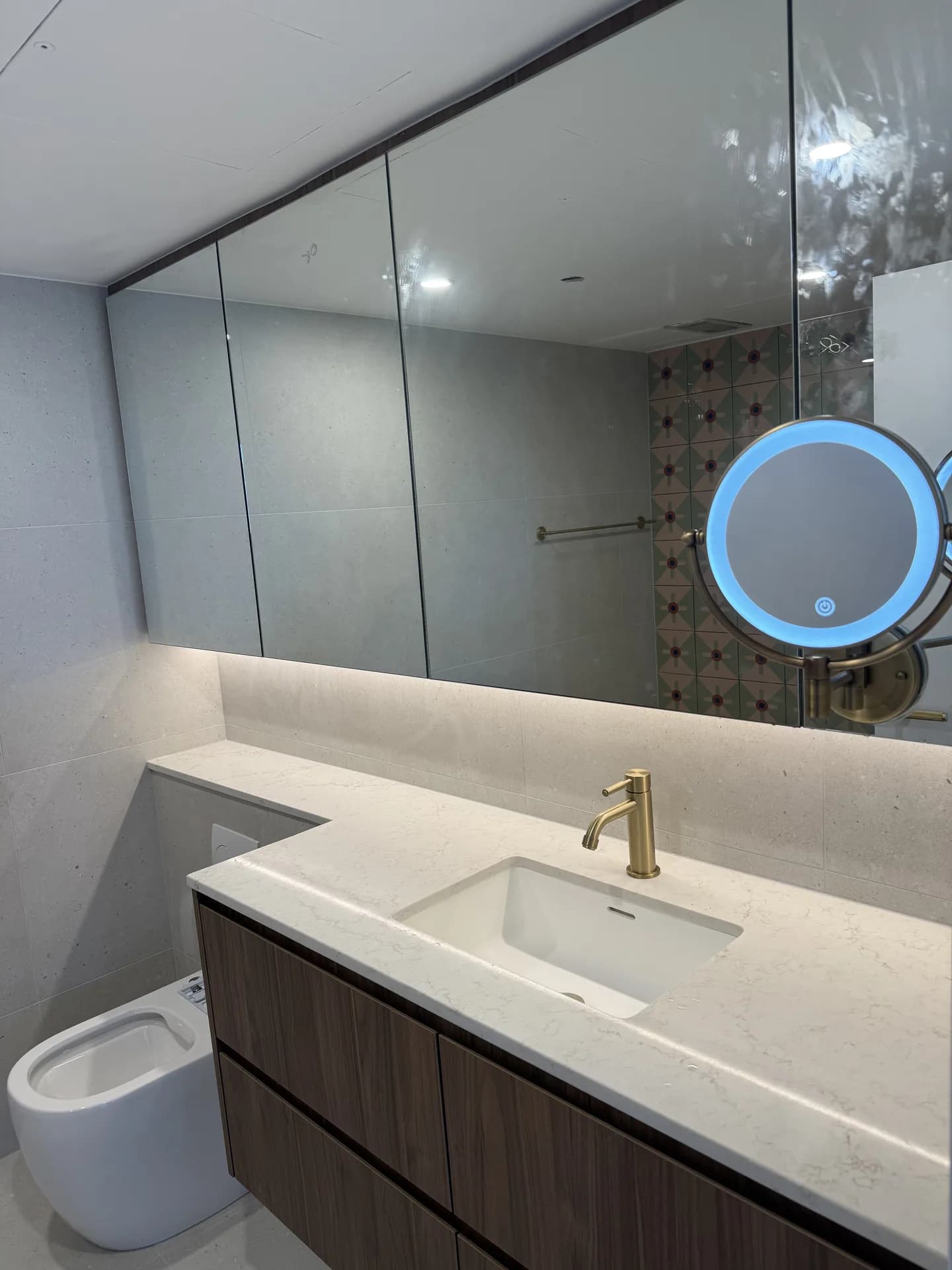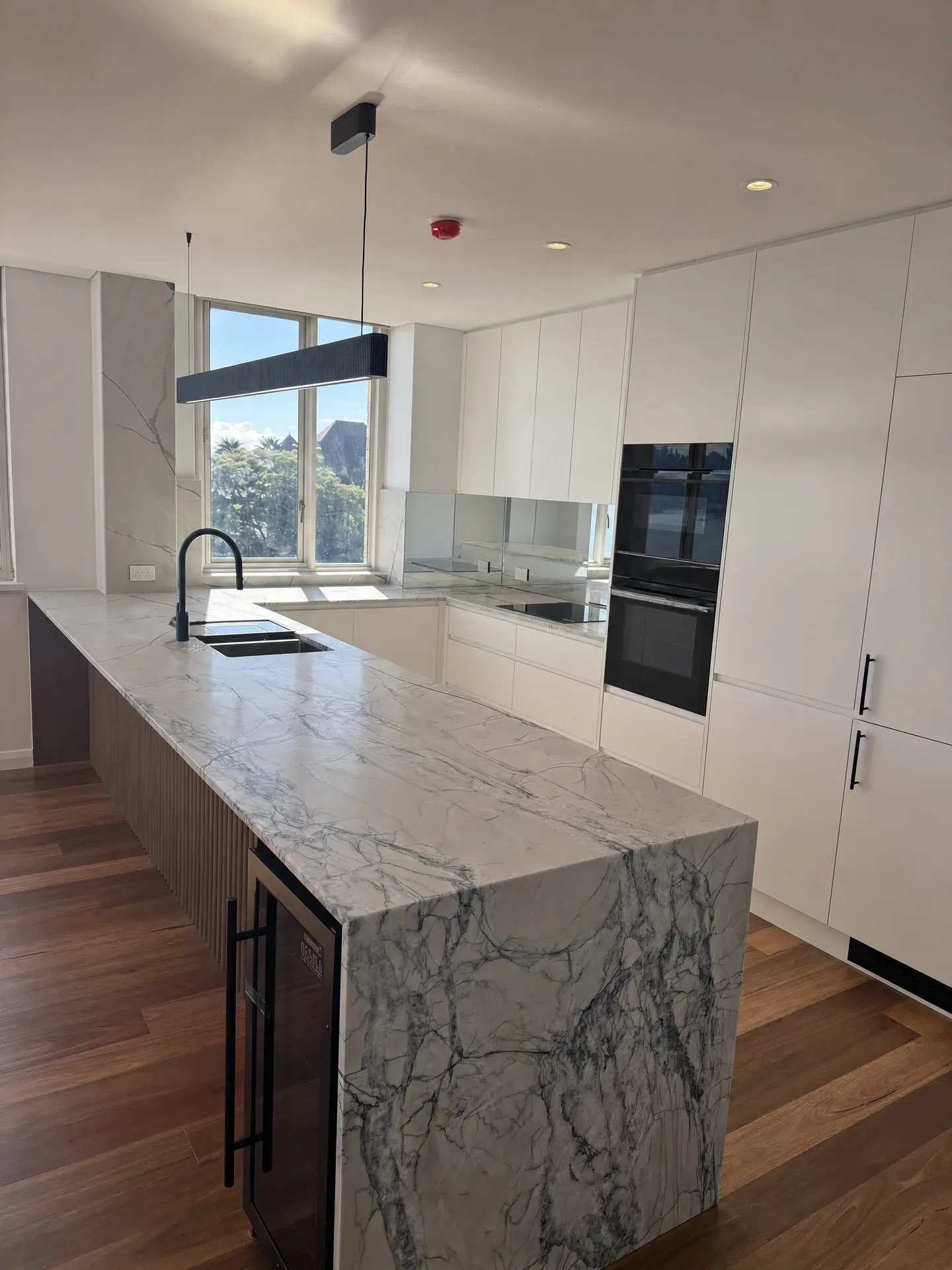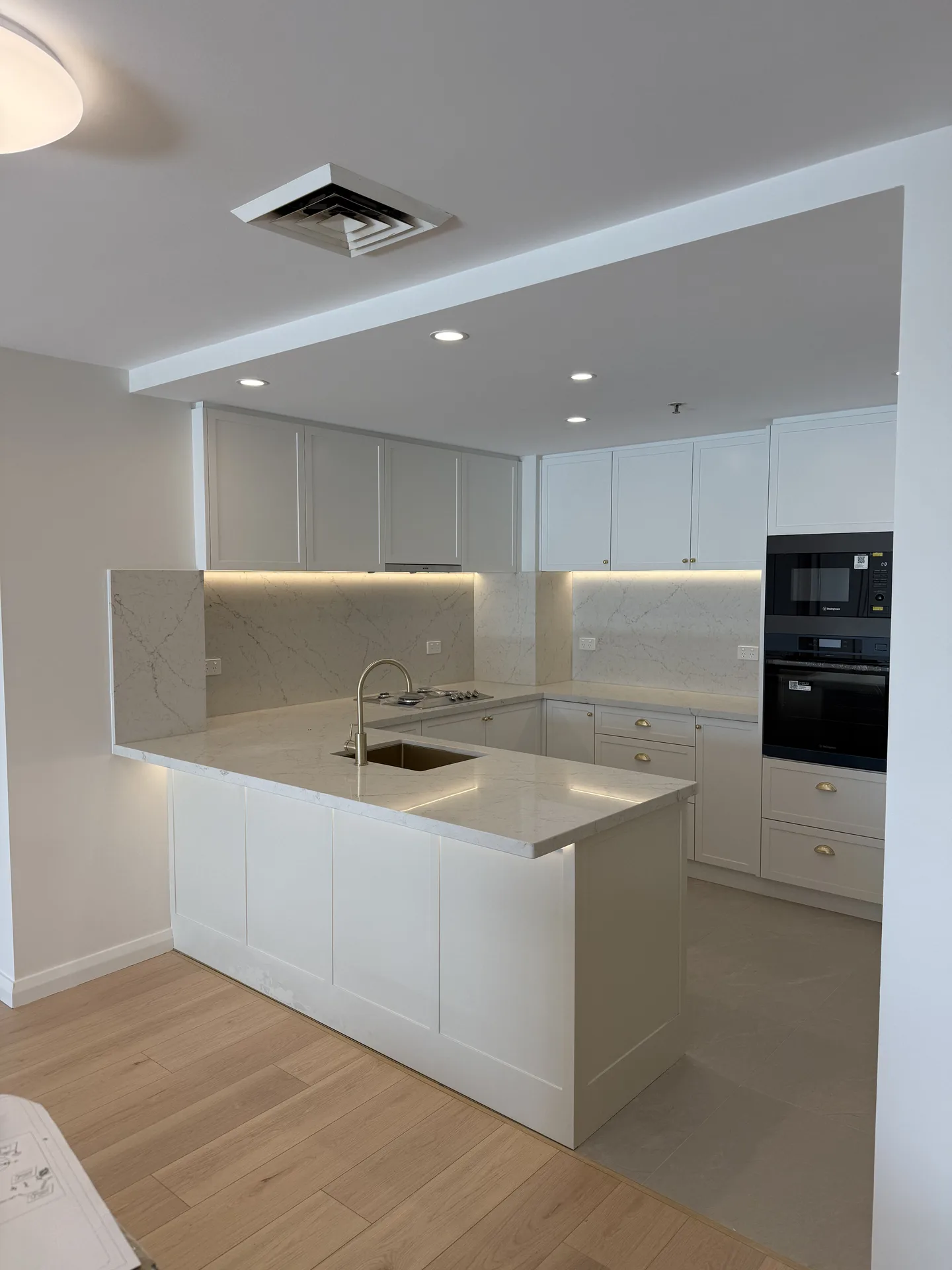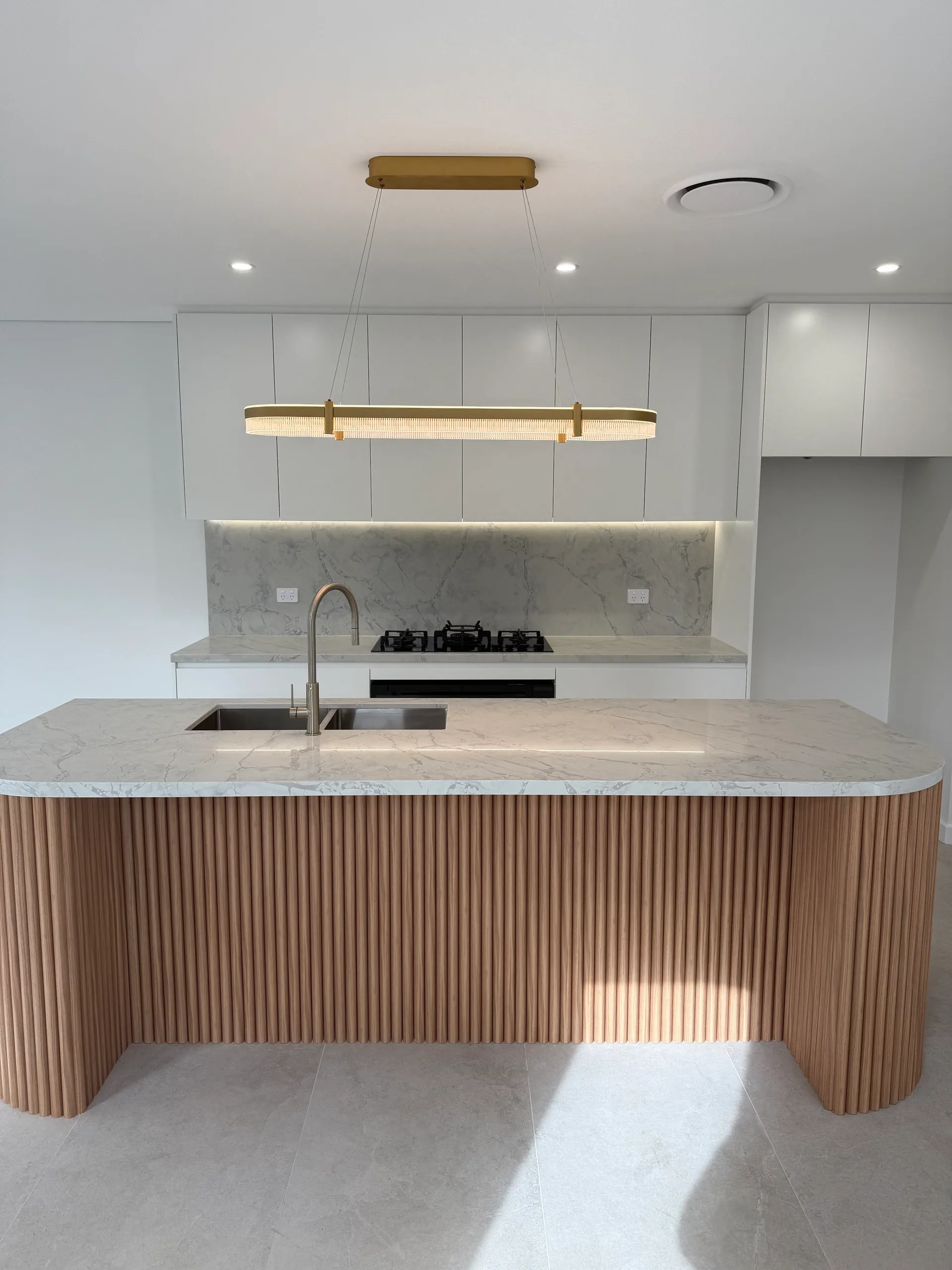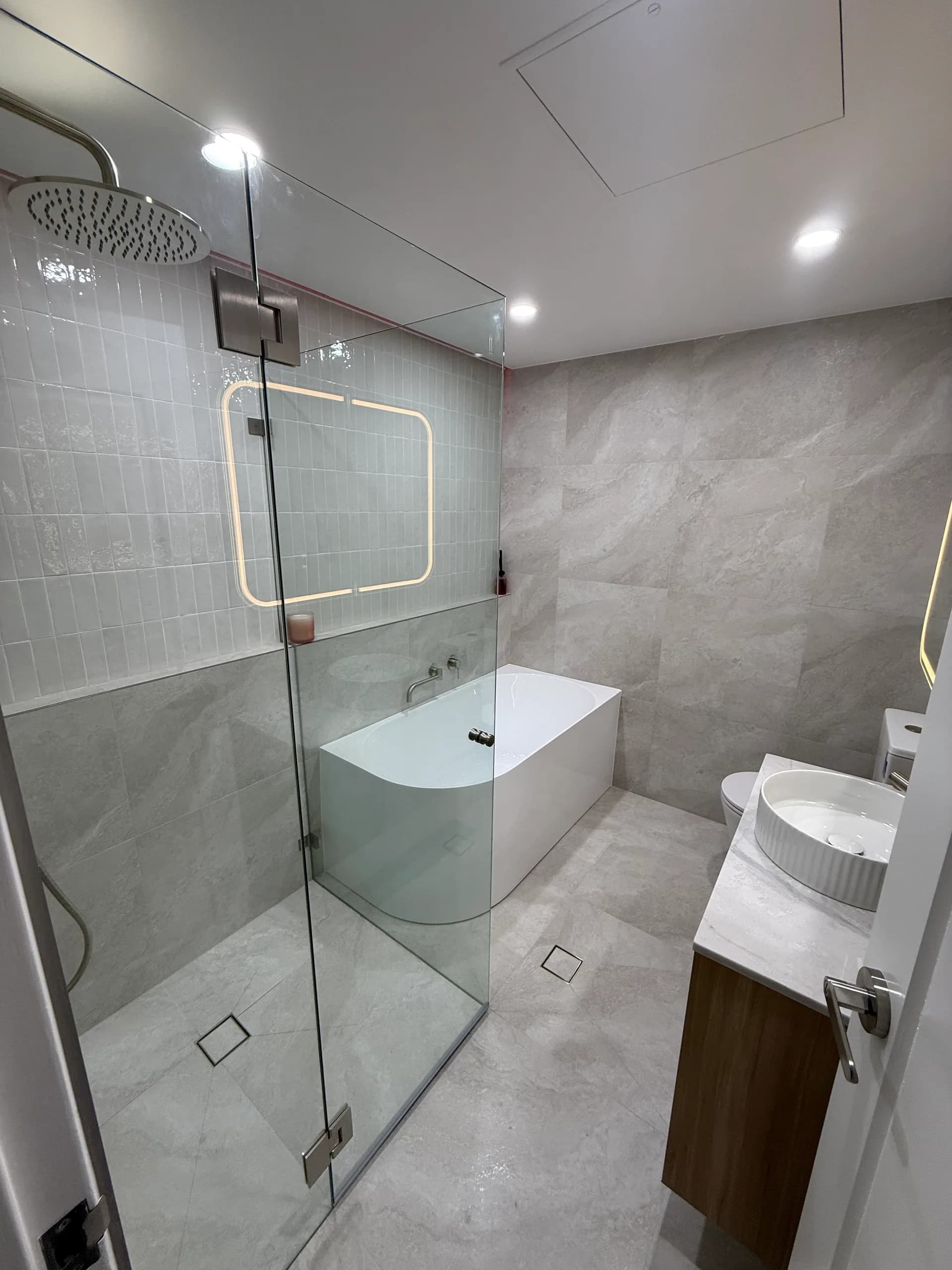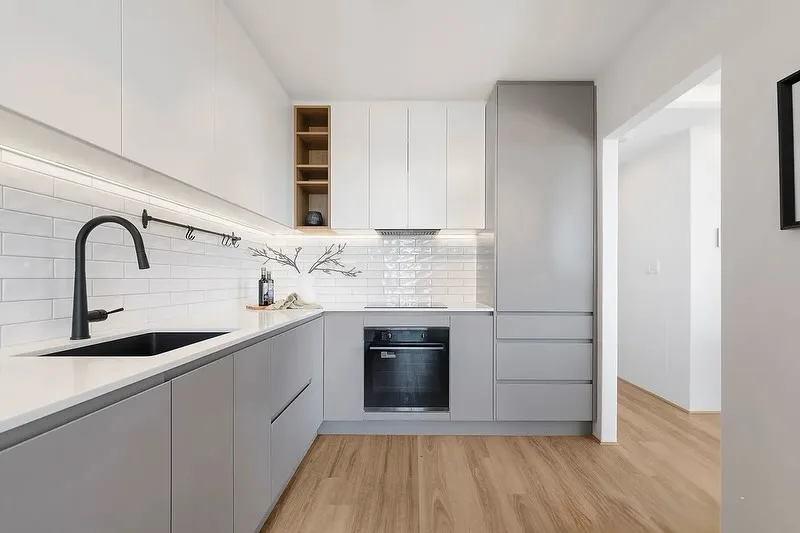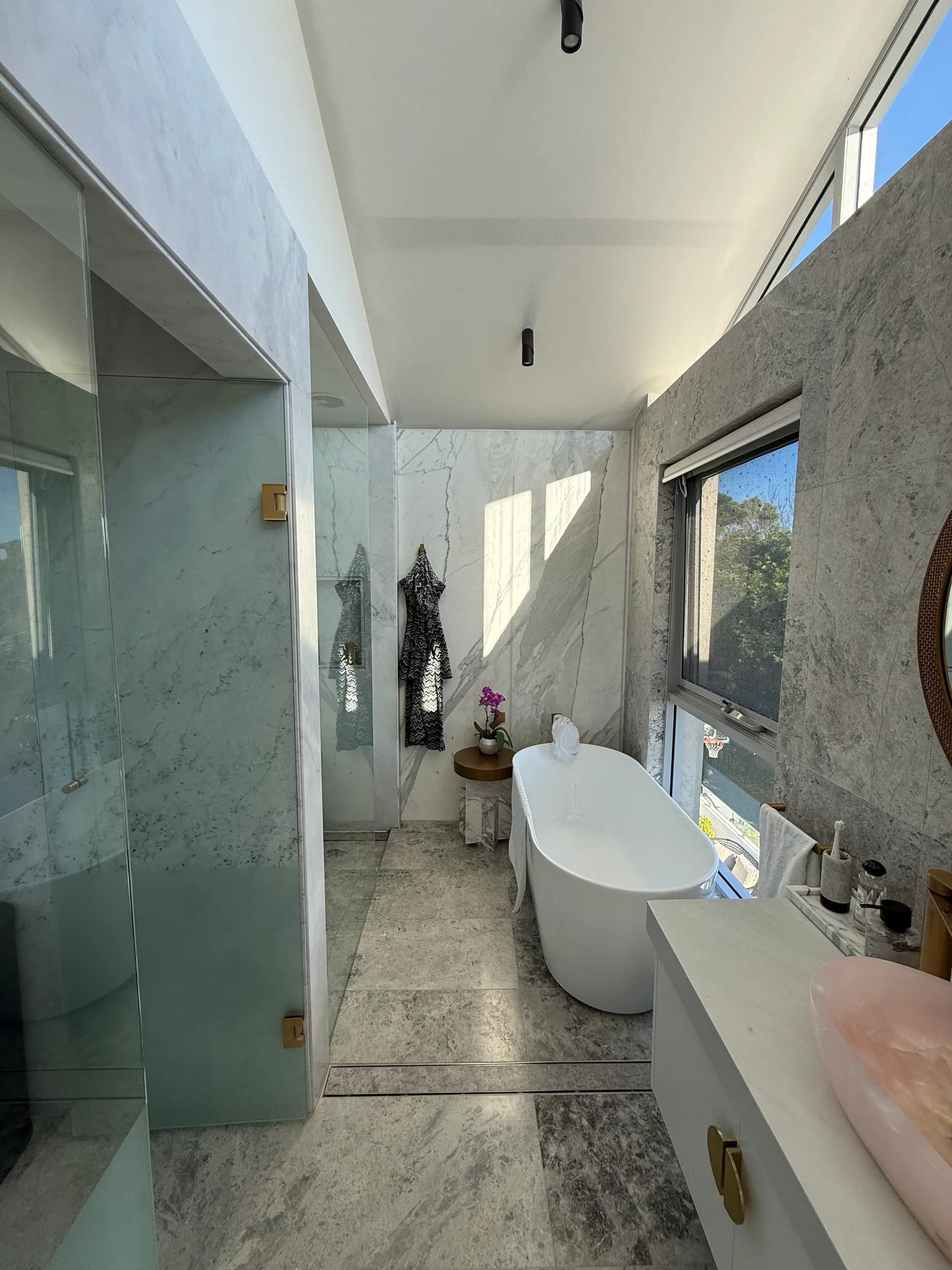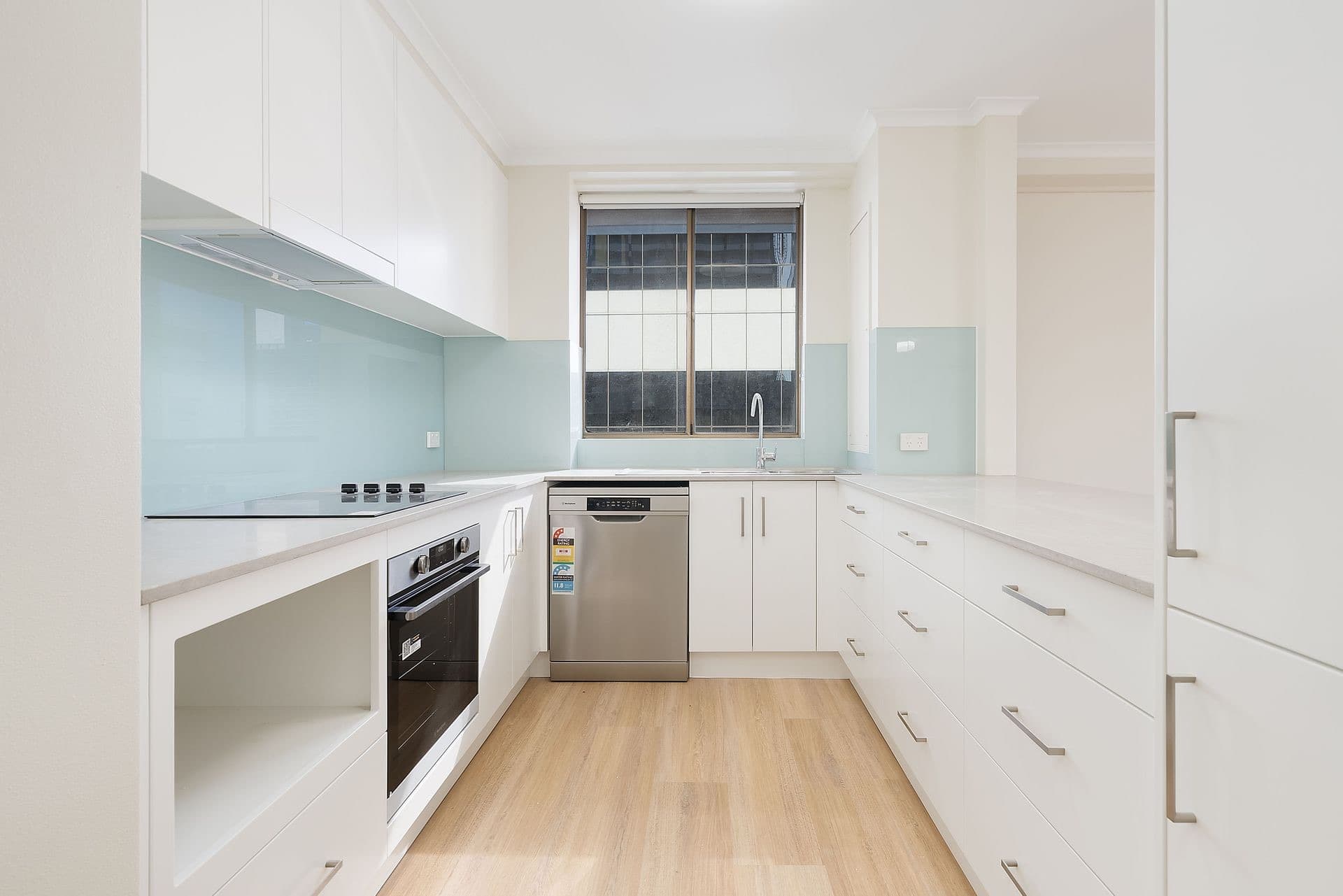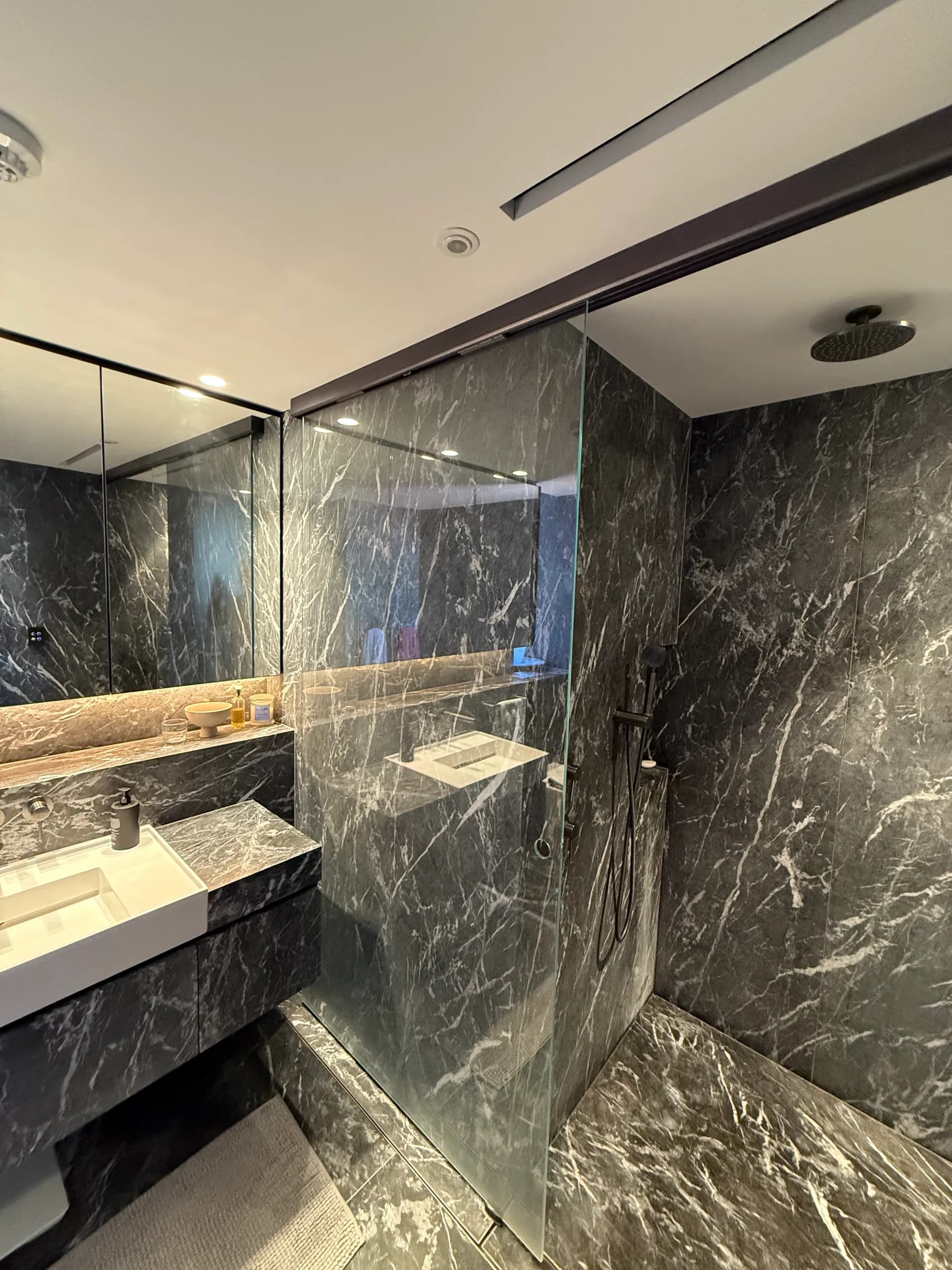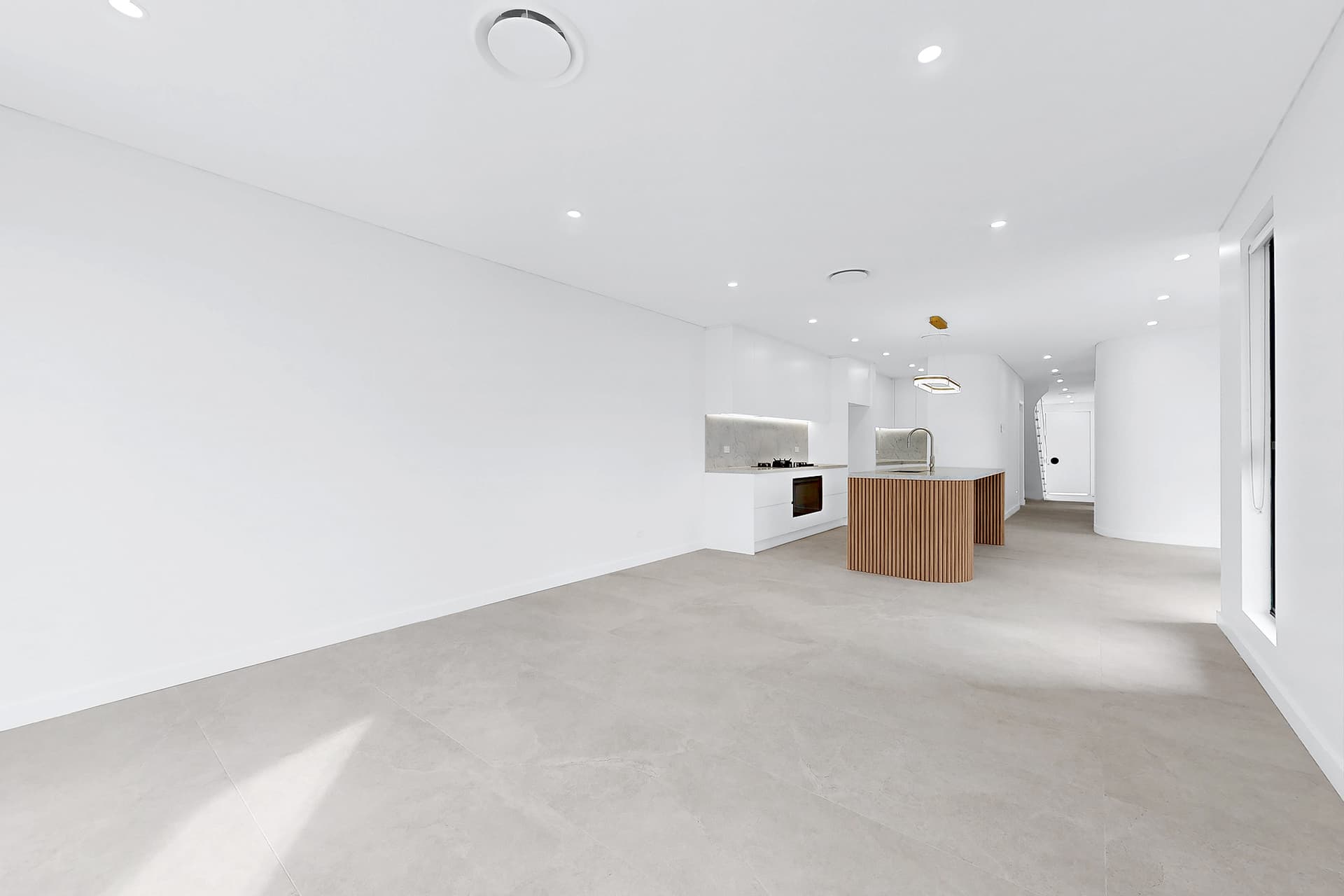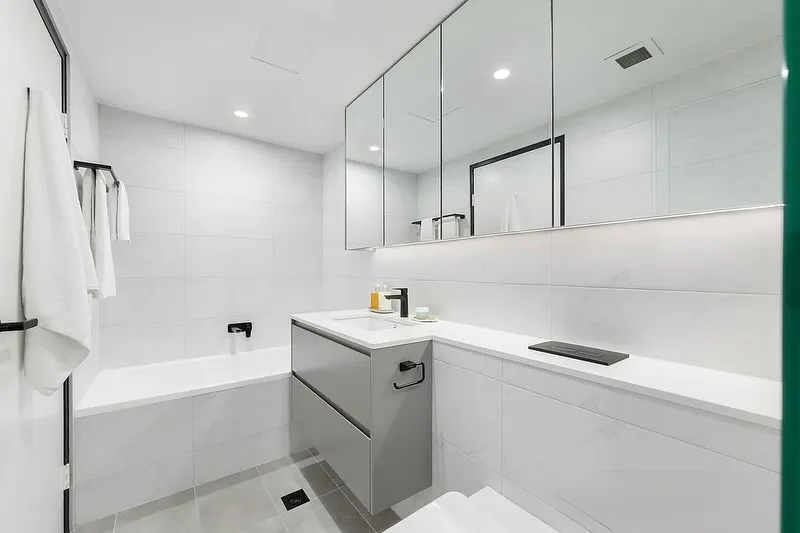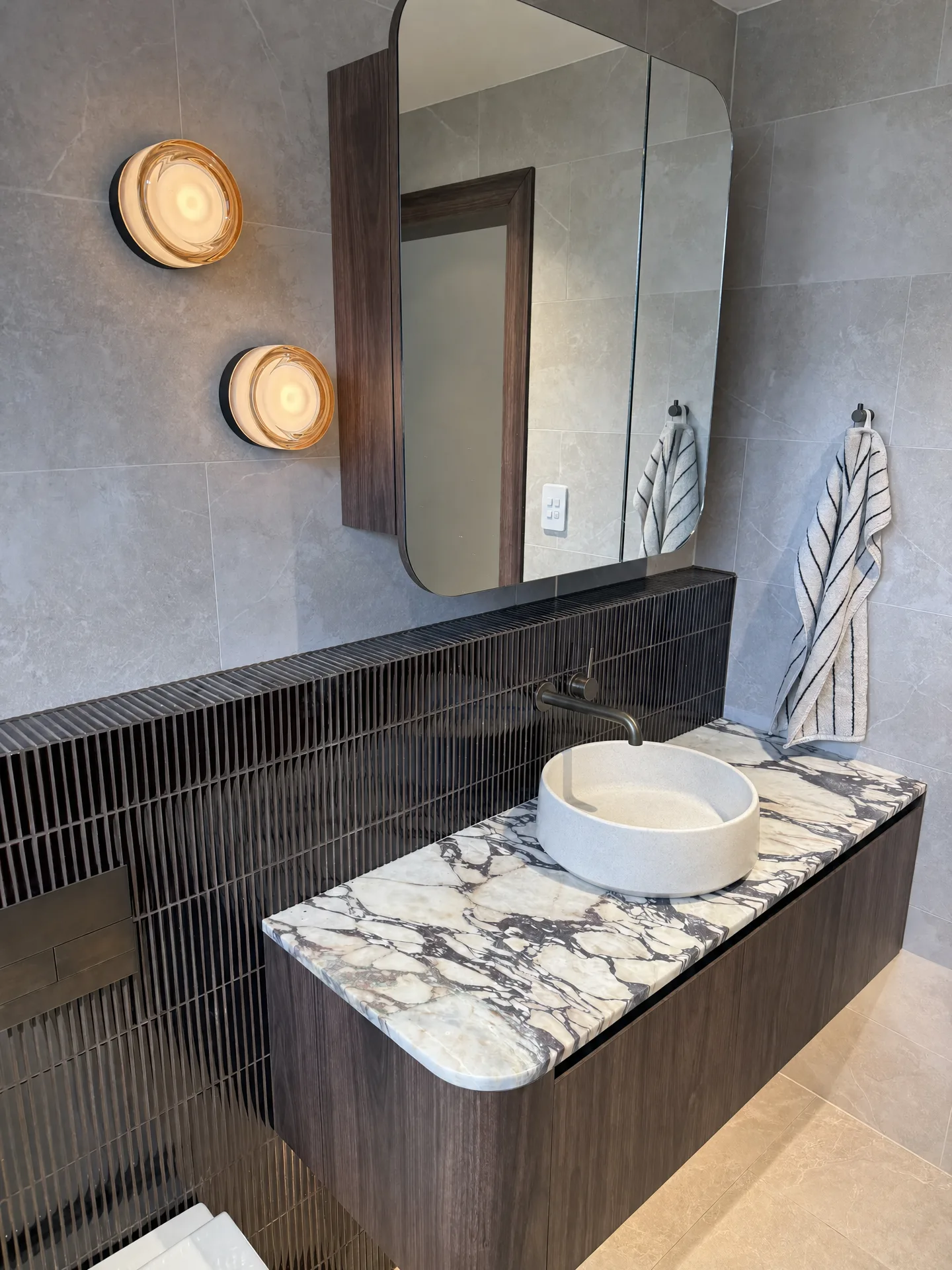
Bondi is a suburb of flats. At the 2021 Census 85.7 percent of occupied dwellings in Bondi Beach were apartments, against 21.7 percent across New South Wales, and most of them sit in small blocks put up between the wars.
Renovators who work on houses price a Bondi flat like a house. The stairs, the neighbour under the bathroom floor and the owners corporation are the parts that move the number.
What is different about renovating in Bondi
Two- and three-storey blocks, and no lift
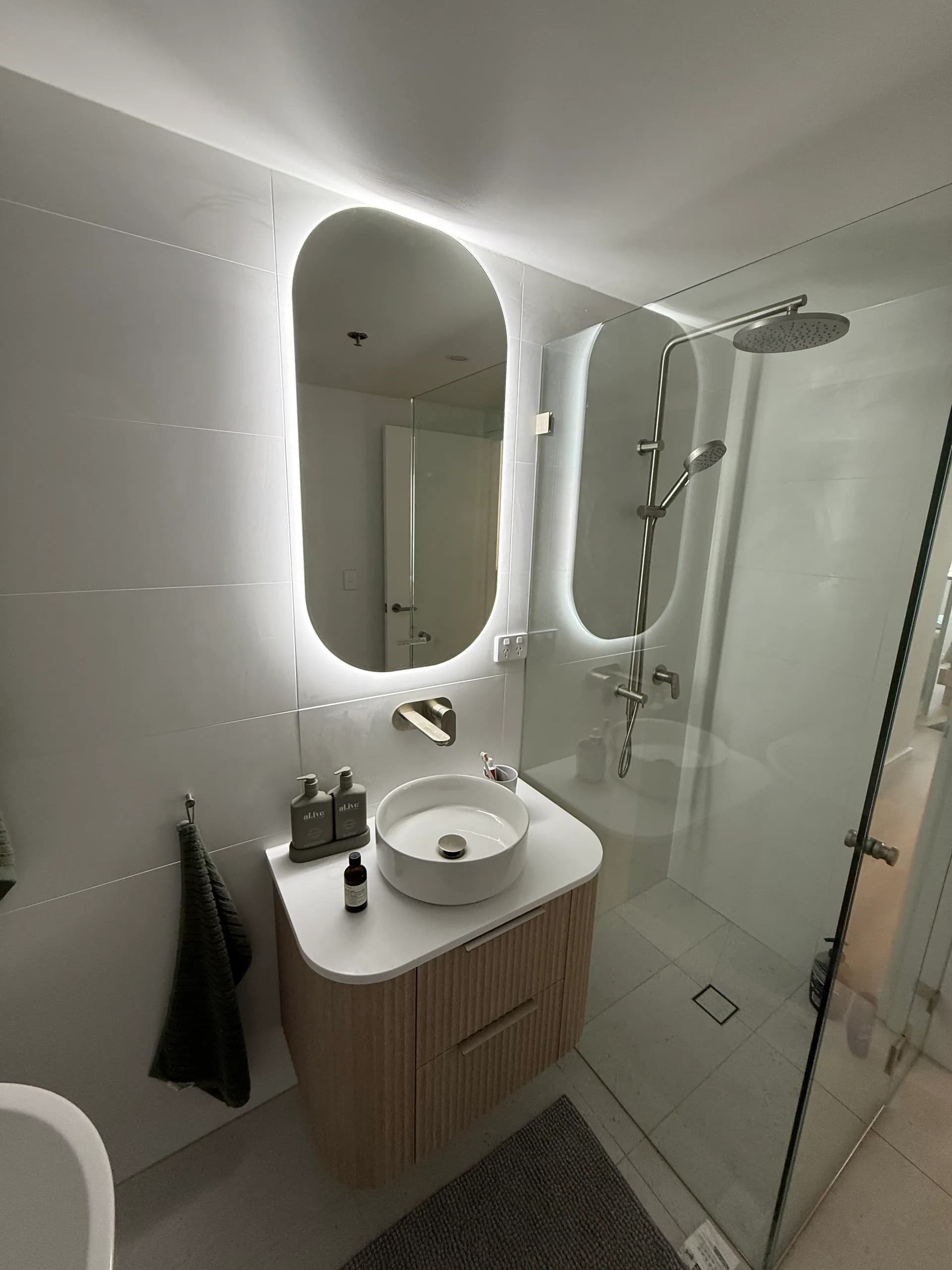
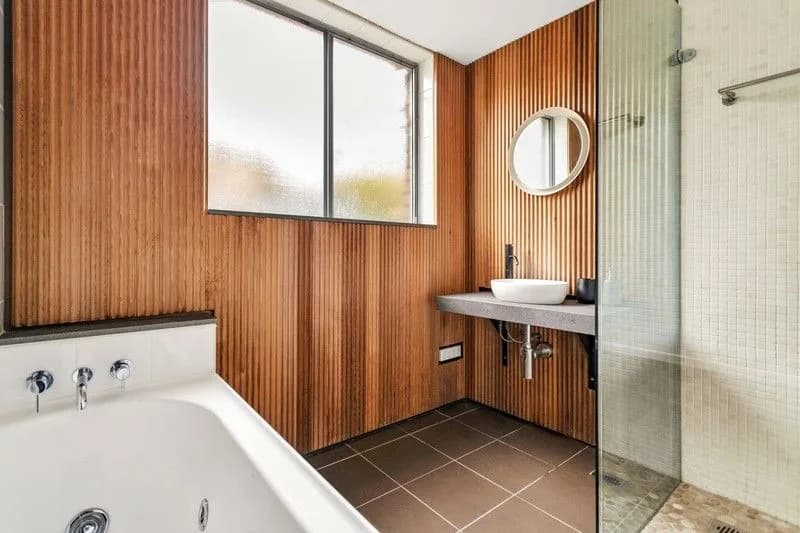
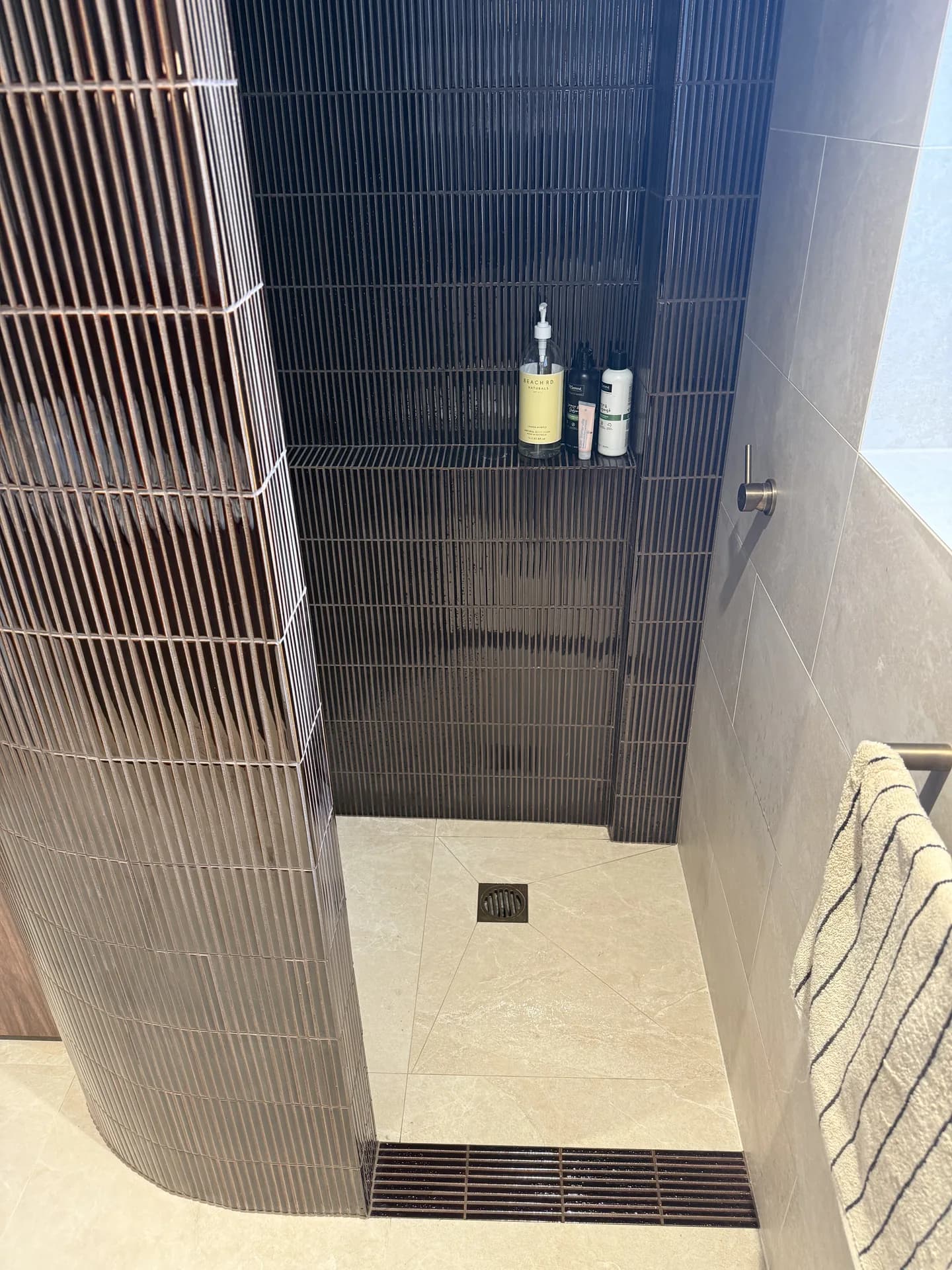
Bondi Beach filled up with flats in a hurry. Waverley Council's own interwar heritage study counts 647 flats in the area in 1921 and 4,380 by 1933, and describes what went up as two and three storey flats clustered close to the beach. Blocks that size were never given a lift. Our Bondi Beach bathroom went into a six-unit walk-up: every sheet of board, every box of tile and the joinery went up the stairs by hand, and the strip-out came back down the same way. That reshapes the sequence more than the price. Deliveries have to land in the order the trades need them, because there is nowhere on a landing to stack a bathroom while it waits.
What the heritage conservation area controls
Bondi Beach is one of Waverley's 17 heritage conservation areas, and Brighton Boulevard in North Bondi is another. Owners hear “conservation area” and assume every job needs council. Clause 5.10 of the Waverley Local Environmental Plan 2012 reads narrower than that. For a building inside a conservation area that is not itself a listed heritage item, the consent it calls up is generally for demolition or for altering the exterior, including its detail, fabric, finish and appearance, while structural change inside is usually caught only where the building is a listed item in its own right. So for a bathroom or kitchen rebuilt within its own walls, the gate is normally the owners corporation. We read the planning certificate before quoting, because the answer changes if your block is individually listed.
Bondi Junction is a different building
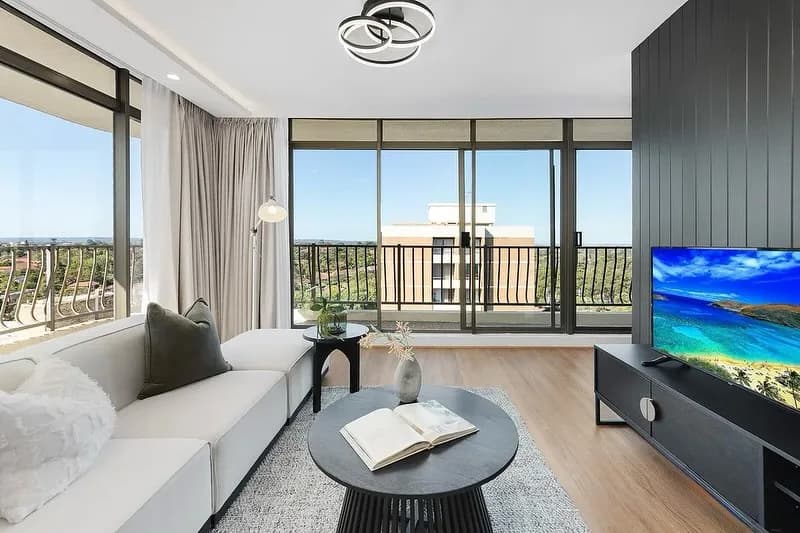
A job at the Junction runs nothing like a job at the beach. The interchange was rebuilt from 1999 with two residential towers over 70 metres, and the Westfield redevelopment opened in stages through 2003 and 2004, so a lot of the housing there is recent high-rise. The Census shows the split: 64.9 percent of Bondi Junction dwellings are flats against 85.7 percent at Bondi Beach, with far more terraces and townhouses filling the gap. In a tower you book a service lift and a loading dock and work to a large owners corporation's meeting calendar. A couple of kilometres east, you carry it up three flights and the committee is four neighbours.
This is the part we carry. Across 30 years and more than 1,000 Sydney apartments, we have made the building side of the job our problem rather than yours. We prepare the application and the by-law, deal with the strata manager, sequence deliveries around the stairs, work inside the building's hours, and hand over the waterproofing certificate at the end. Fine Touch Group holds NSW Builder Licence 151772C.